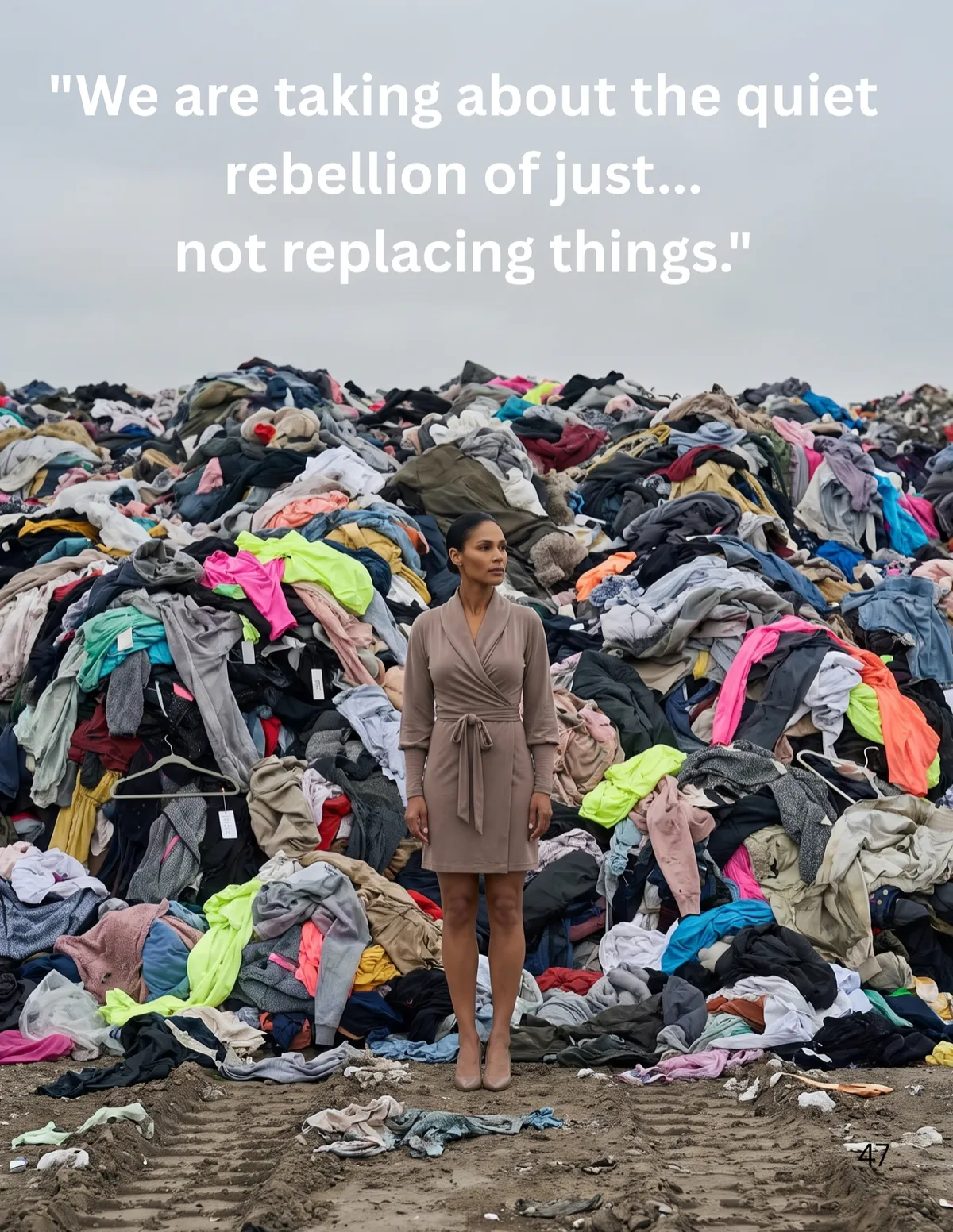
The Quite Rebellion
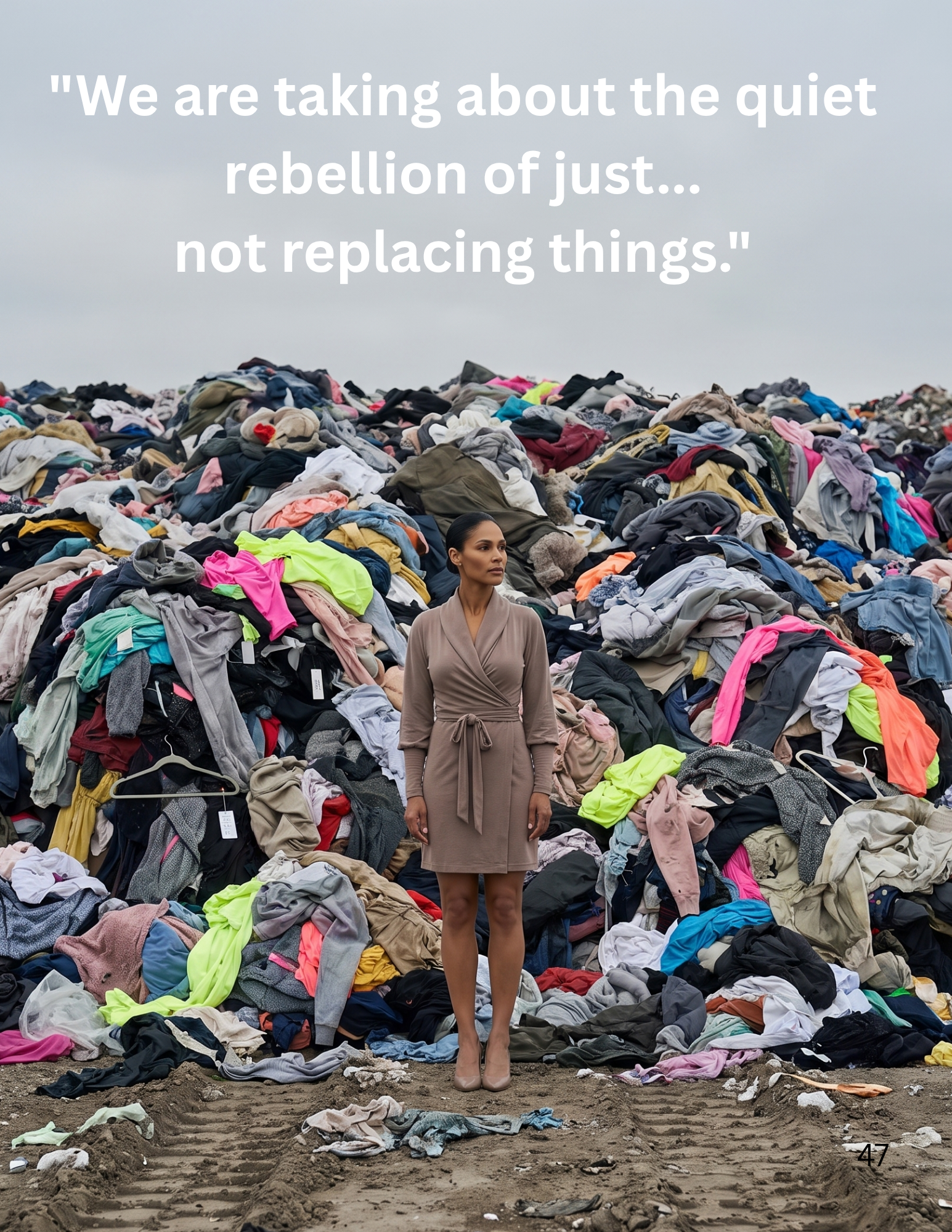
Disposable Fashion Is a Habit. Slow Fashion Is a Mindset.
There was a time when clothes were built to outlast the person who bought them. A well-made coat was handed down. A good pair of boots was resoled, not replaced. Garments carried weight — literally and otherwise — because they were made to be worn for years, not weeks.
That world feels almost unrecognizable now. The fashion industry has spent the last two decades training us to think in trend cycles instead of decades. New "drops" arrive weekly. Prices are low enough that a poorly made shirt feels disposable by design, because in a very real sense, it is. We've been sold the idea that style means constantly replacing what we own, rather than refining what we already have.
But habits, by definition, are something we can examine — and change.
Disposable fashion is a habit. It's built on convenience, low prices, and a constant low-grade anxiety that what's in our closet is already out of date. It doesn't require much thought. That's exactly what makes it so easy to fall into, and so hard to walk back from once it becomes the default.
Slow fashion asks something different of us. It isn't a aesthetic or a marketing category — it's a mindset shift. It means asking whether a piece is well made before asking whether it's on sale. It means valuing fabric, construction, and longevity as much as we value the way something photographs. It means being willing to pay more for less, and being okay with that trade.
This isn't about guilt or austerity. Nobody needs to feel bad about the clothes already sitting in their closet. The shift starts much smaller than that: the next time you're about to buy something, pause. Ask whether you actually love it, or whether it just caught your attention for a second. Ask whether it's something you'll still want to wear in five years, or something that will end up in a donation bag in five months.
It also means looking differently at what we already own. A piece doesn't become disposable just because it's a few seasons old. Sometimes it just needs new life — a repair, a redesign, a reason to be worn again instead of replaced. Some of the most interesting pieces I've worked on weren't new at all; they were old garments given a second story, often more compelling than their first one.
There's a quieter kind of confidence that comes from wearing something you chose carefully, rather than something you bought quickly. It doesn't shout for attention the way trend pieces do. It doesn't need to, because it isn't trying to prove anything. It's simply well made, and it lasts — which, in an industry built on the opposite premise, is its own quiet form of rebellion.
The future of fashion doesn't have to mean more — more newness, more turnover, more consumption dressed up as self-expression. It might actually mean less: fewer pieces, made better, worn longer, chosen with intention.
Breaking the habit doesn't happen all at once. It happens one purchase, one repair, one "no, I don't need this" at a time. Slow fashion isn't a rulebook. It's a mindset you build, piece by piece — much like the wardrobe it leads to.


